Building a Custom Home in Metro Vancouver: Step by Step
James Whitfield
14 mins
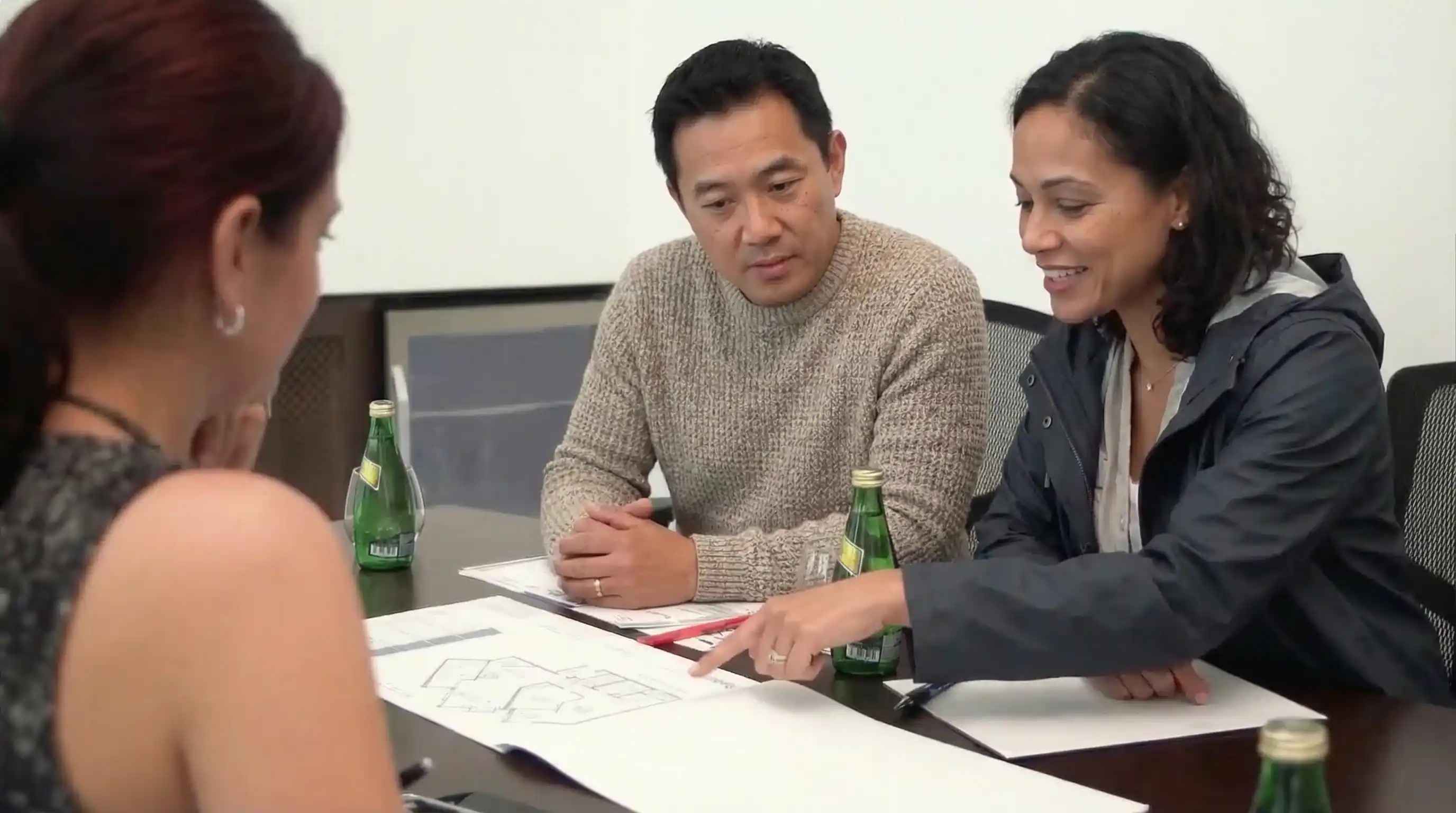
Building a custom home is one of the most exciting times of your life.
You're creating a space that fits your family, your lifestyle, your future.
Every room, every detail, designed around how you actually live.
But most people who start dreaming about building a custom home in Vancouver hit the same wall pretty quickly.
They don't know how the whole process works.
How long will it take?
What happens first?
When do you pick finishes?
When do permits happen?
Who's managing all of this?
What decisions will you need to make, and when?
The unknown is what makes custom home building feel overwhelming. And when people feel overwhelmed, they either rush into decisions too early or freeze and never start at all.
This guide is here to help fix that.
We're going to walk you through the entire custom home building process in Vancouver.
Phase by phase.
From your very first conversation with a builder to the day you pick up your keys.
By the end, you'll know exactly what happens, when it happens, and why it happens in that order.
No mystery. No surprises. Just a clear map of the road ahead.
Before We Start: Why the Process Matters More Than You Think
Here's something worth saying up front.
The quality of your custom home building experience depends almost entirely on the process your builder follows.
Two builders can use the same trades, the same materials, and the same construction techniques. But if one has a clear, step-by-step process and the other is figuring it out as they go, you'll have two completely different experiences.
A good process protects you from budget surprises, timeline delays, decision fatigue, and the kind of stress that gives custom home building its bad reputation.
So as you read through the phases below, pay attention to the why behind each step. The sequence matters. The order exists for a reason. And when you understand the reason, you'll feel a lot more confident when you start your journey of building your dream custom home.
Phase 1: Discovery Call (Fit and Intent)
Everything starts with a conversation.
This is a quick phone or video call where we get to know each other. We'll ask about your goals, your timeline, your budget range, and the property you're working with.
But this call goes deeper than surface-level details.
We want to understand your intent. Are you building your forever home, the one where your kids grow up and you grow old? Or are you building with a plan to sell in five to seven years?
This matters because it changes the design approach entirely.
A forever home gets designed around your specific lifestyle, your routines, your preferences.
A home built with resale in mind gets designed with broader market appeal, layouts and finishes that attract the widest pool of future buyers.
By the end of this call, both sides know whether there's a good fit. If there is, we move fast.
Typical duration: 10 to 15 minutes
Phase 2: Site Consultation (Your Property, In Person)
If the discovery call confirms a good fit, we schedule a site visit.
We come to your property. We walk it together. We look at the lot dimensions, the grade, the lane access, the neighbouring structures, the trees. We get a feel for the physical reality of where your home will be built.
But this visit is about more than just looking at dirt.
We walk you through the full timeline of what's ahead.
This is where the relationship starts to feel real. You're standing on the land where your home will stand. And you're standing with the team that will help you build it.
Typical duration: 1 to 2 hours on site
Phase 3: Property Analysis and High-Level Budget
This is one of the most important steps in the entire process. And most builders skip it.
Before we design a single room, we need to answer a fundamental question:
what are you actually allowed to build on this property?
Vancouver's zoning regulations are complex. Setbacks, height limits, lot coverage, floor space ratio, density rules, tree protection bylaws. These rules define an "invisible box" on your property. Everything you build has to fit inside that box.
We produce a site plan concept that shows:
The maximum allowable square footage on your lot
Required setbacks from property lines
The buildable envelope (your "invisible box")
Whether a secondary suite, laneway home, or multiplex is possible
Then we pair that analysis with a high-level budget. Based on your goals, the buildable area, and current construction costs, we give you a realistic picture of what your project will cost.
This step exists to prevent the most common mistake in custom home building: falling in love with a design that's either too big for your lot or too expensive for your budget. We solve both problems here, before any real design work begins.
Typical duration: 1 to 2 weeks
Phase 4: Design and Cost Engineering (Where It All Comes Together)
This is the phase most people picture when they think about building a custom home. And it's where Vancouver Custom Homes does things differently.
You'll work with our design team to create your home's layout, flow, and aesthetic. Room sizes, ceiling heights, window placements, exterior style, interior organization. Every detail gets shaped around how your family lives.
But here's the critical difference.
While the design develops, we cost-engineer every decision in real time.
Most builders design first, then price later. That creates a painful gap between what you want and what you can afford. Our approach eliminates that gap by keeping design and budget in constant conversation.
If a design choice pushes the cost up, you know immediately. You can adjust, swap, or keep it with full awareness of the cost impact. Every decision is documented as it happens. There are no "we'll figure out the budget later" moments.
3D Modelling and Virtual Reality
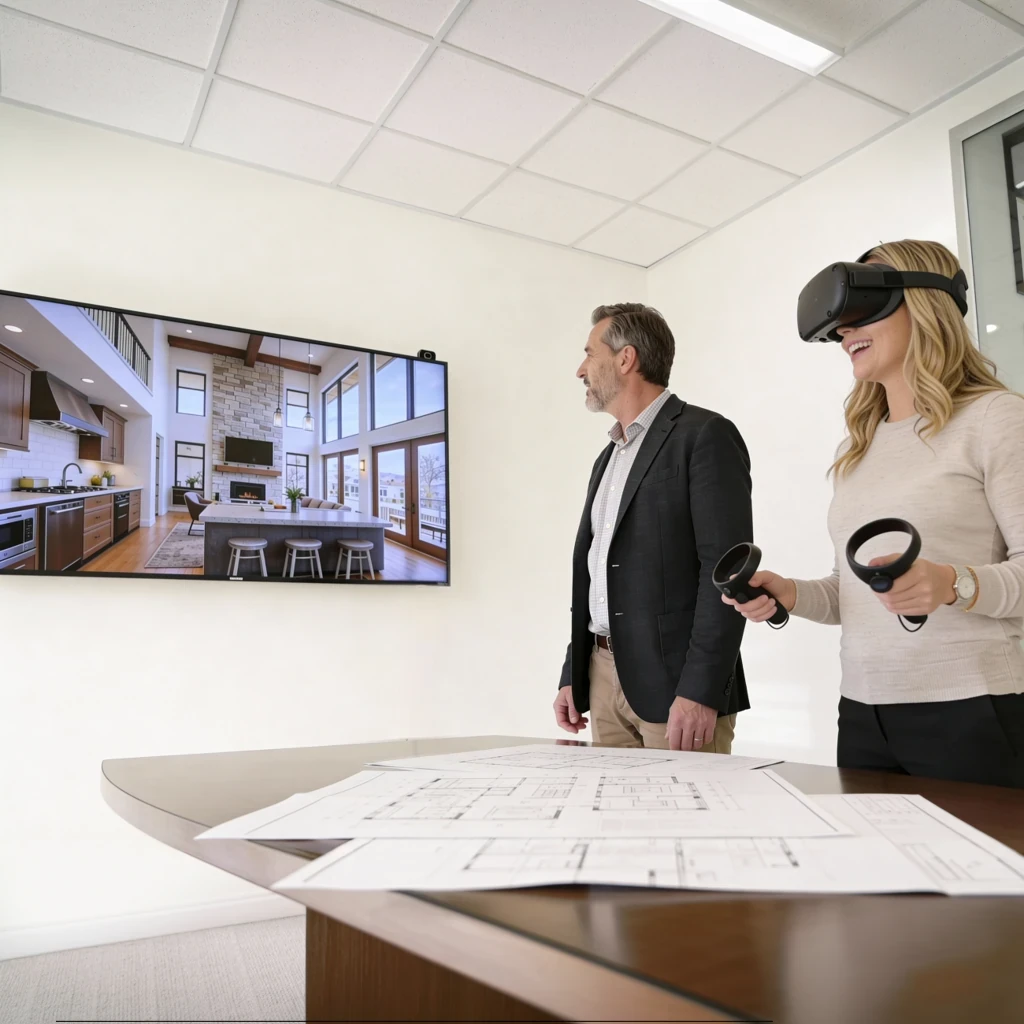
During this phase, we build your home as a full 3D model.
This changes everything about the design experience.
Instead of staring at flat floor plans and trying to imagine what the space will feel like, you can actually see it.
The ceiling heights.
The sightlines from the kitchen to the living room.
The way light falls through the windows in the afternoon.
We take this a step further with virtual reality walkthroughs.
Using VR headsets, you can stand inside your future home and experience the space at full scale before a single nail is driven.
This does two things.
First, it eliminates the guesswork. You're approving a design you've actually experienced, so there are fewer "this isn't what I expected" moments during construction.
Second, it speeds up decision-making. When you can see and feel the space, you make confident choices faster. That keeps your timeline moving.
Who You're Working With
During design, you'll have two key contacts:
Your designer, who shapes the architectural vision, spatial flow, and aesthetic of your home
Your project consultant, who discusses budgeting, options, and the cost implications of every finish and system choice
This dual relationship means creative ambition and financial discipline live in the same room. That's how you get a home you love with a budget that makes sense.
Typical duration: 6 weeks to 3 months, depending on complexity and how quickly you make decisions
Phase 5: Finalized Scope, Fixed Cost, and Allowances
Once the design is locked, we produce three critical documents.
A finalized scope of work. This details every element of your home's construction, down to the number of electrical outlets, light fixtures, flooring types, and tile layouts.
A fixed cost. All construction labour, building materials, and structural components are priced and locked. This covers everything you don't directly control: framing, concrete, roofing, plumbing, electrical, insulation, drywall, and more.
A detailed allowances list. For finish materials (the things you do control, like flooring, tile, cabinetry, countertops, and fixtures), we provide itemized allowances. Each category has a specific dollar amount allocated.
Here's why this matters.
If you choose a countertop that costs more than your allowance, you know the exact cost increase before you approve it. If you choose one that costs less, you keep the savings. The math is always visible. The control is always yours.
This step is where budget certainty becomes real. You're signing off on a scope you understand, a fixed cost you've agreed to, and a transparent system for managing the variable pieces.
Typical duration: 1 to 2 weeks
Phase 6: Permitting (The Big Wait)
With your finalized scope and design complete, we prepare your building permit application.
This includes:
Full building permit drawings
Structural engineering
Energy modelling to meet BC Energy Step Code requirements
Energy advisor coordination
All required documentation for the City of Vancouver's submission standards
Then we submit to the city. And then... we wait.
Let's be straightforward about this.
Permitting is the single biggest timeline variable in the entire process, and it's largely outside anyone's control.
Vancouver's permit processing times have improved.
Median times for new single-family homes dropped from 34 weeks to around 21 weeks in 2024. The city's 3-3-3-1 framework targets three weeks for single-family and townhouse permits. But targets and reality are different things.
What is in your control is the quality of the submission.
A complete, clean, properly formatted application moves through the system faster than one that requires revisions and resubmissions.
Every time a submission goes back for corrections, you lose weeks.
This is one of the places where your builder's experience with Vancouver's specific permitting system makes a measurable difference.
We know what the city expects.
We submit clean applications.
We follow up consistently.
Typical duration: 5 to 8 months (the main variable in your overall timeline)
Phase 7: Interior Selections and Procurement
Here's the good news about the permitting wait.
You don't just sit around.
While your permit application works through the city's review process, this is when you work with our interior designer to finalize your finish selections.
Flooring
Tile
Cabinetry
Countertop
Fixtures
Hardware
Paint colours
Appliances
This is one of the most enjoyable parts of the process.
You're choosing the materials that will define how your home looks and feels every day.
Our interior designer guides you through these decisions. They help you stay cohesive across rooms, balance aesthetics with practicality, and make selections that fit within your allowances.
We also handle all ordering, logistics, and lead-time coordination during this phase. If a specific countertop material has a 12-week lead time, we need to order it now so it arrives when construction needs it.
A note on interior design time: We allocate dedicated hours for interior design support. And we don't charge extra if the process takes longer than expected. Why? Because if we leave clients to make these decisions alone, the results suffer and the timeline stalls. Keeping our designer involved keeps the quality high and the project moving.
Typical duration: Runs parallel with permitting (2 to 4 months of active selection work)
Phase 8: Construction Documentation
Before construction begins, we create a second set of detailed plans.
The building permit drawings tell the city your home meets code.
The construction documentation tells our trades exactly how to build it.
This includes:
Detailed finish plans with elevations for every room
Flooring patterns and material locations
Cabinetry configurations
Exact placement of every plug, switch, and light fixture
Tile layouts and specifications
The purpose is simple:
eliminate confusion on site.
When every trade knows exactly what goes where, there's less guesswork, fewer mistakes, and fewer "I thought you meant..." conversations.
This documentation is the bridge between what you approved during design and what gets built during construction.
Typical duration: 1 to 2 weeks (often overlaps with final selection approvals)
Phase 9: Construction (Your Home Takes Shape)
Permits are issued. Materials are ordered. The site is prepped.
Now we build.
Your construction phase is managed by a dedicated team:
A full-time site manager who oversees daily operations on your property
A full-time project manager who coordinates trades, manages the schedule, and handles communication
Your interior designer, who works alongside the PM and site manager to ensure finishes are executed at the level they were designed
What You'll See and Know Every Week
Custom home construction can feel confusing if your builder doesn't keep you informed.
That's why we built a visibility system around the entire construction phase.
Client portal. You'll have access to a portal where project information, approvals, and documents live in one place.
Daily logs. Every day, your site manager logs progress with photos and notes. You can see exactly what happened on your property today.
Live schedule. A full project schedule, updated regularly, showing where we are and what's coming next.
Bi-weekly site meetings. Every two weeks, you meet with your project manager on site. You walk the project together, review progress, discuss upcoming milestones, and address any questions.
Documented everything. From beginning to end, your project is photographed and logged. Every inspection, every milestone, every installed system.
Typical duration: 10 to 14 months
Change Orders (Because They Happen)
Even with the best planning, sometimes changes come up during construction.
Maybe you see the space framed out and realize you want to move a doorway.
Maybe a material you selected is discontinued and needs a substitute.
Here's how we handle it.
Your project manager assesses the change and documents it with photos. The change gets uploaded to your daily log with a description of the options and the cost impact. You review, discuss, and approve before any work happens.
There are no surprise invoices. No "by the way, this ended up costing an extra $10,000."
Every change is documented, priced, and approved by you.
This is consistent with our fixed-cost approach:
You always know the cost before you say yes.
Phase 10: Final Inspections, QA, and Move-In
The finish line.
As construction wraps up, we move through a series of final inspections and quality checks. Municipal inspectors verify code compliance. Our internal team does a detailed walkthrough to catch any deficiencies or touch-ups.
Then we hand you the keys.
But the relationship doesn't end at move-in.
Warranty and Post-Move-In Support
Your new home comes with a 2-5-10 New Home Warranty through Pacific/Progressive Home Warranties:
2 years of coverage on interior finishes
5 years on mechanical systems (plumbing, electrical, HVAC)
10 years on structural components
If something comes up after you move in, you call us directly. We stand behind our work because we intend to be your builder for life.
The Full Timeline at a Glance
Here's how the entire process maps out from start to finish:
Phase | Duration | Notes |
|---|---|---|
Discovery Call | 1 day | Phone or video |
Site Consultation | 1 day | In person on your property |
Property Analysis + Budget | 1 to 2 weeks | Zoning, buildable area, high-level cost |
Design + Cost Engineering | 6 weeks to 3 months | 3D modelling, VR, budget alignment |
Scope, Fixed Cost, Allowances | 1 to 2 weeks | Everything documented and approved |
Permitting | 5 to 8 months | The main timeline variable |
Interior Selections | Parallel with permitting | Finishes, materials, procurement |
Construction Documentation | 1 to 2 weeks | Detailed build plans for trades |
Construction | 10 to 14 months | Full build with weekly visibility |
Inspections + Move-In | 2 to 4 weeks | QA, final walkthroughs, handover |
Total: First Call to Move-In | 18 to 24 months |
The biggest variable is permitting. Everything else is planned, sequenced, and managed.
Why "Bite-Sized" Steps Change Everything
If you look at the timeline above and feel a little overwhelmed, that's normal.
18 to 24 months is a long time.
But here's the thing. You never have to think about all of it at once.
Our process is designed so that you only focus on the step you're in right now.
During design, you're focused on design.
During selections, you're focused on selections.
You're finishing step one before you think about step two.
You're making decisions in small, easy batches instead of facing everything at once.
This is intentional.
Decision fatigue is real, and it's one of the biggest threats to a smooth custom home build.
When people feel like they need to decide everything at once, they freeze, rush, or make choices they regret.
Our job is to make sure that never happens. We guide you through one step at a time, in the right order, at the right pace.
That's how building a custom home stays exciting instead of becoming stressful.
What's Your Next Step?
Now you know what the process looks like.
You know the phases, the timeline, and the logic behind the build.
The question is: what's possible on your specific property?
Every lot in Metro Vancouver is different.
Zoning, buildable area, budget, and family needs all vary.
The process above is consistent, but the details are always tailored to your unique situation.
Our free property consultation gives you those details.
We'll review your property's zoning and buildable envelope, discuss your goals and budget, and give you a clear picture of what's ahead.
You'll walk away knowing whether building a custom home makes sense for you and exactly how the process would unfold.