How Much Does It Cost to Build a Custom Home in Vancouver?
James Whitfield
9 minutes
So you've been thinking about building a custom home in Vancouver.
Maybe you've outgrown your current place.
Maybe the house is old and the layout doesn't work anymore.
Maybe you just bought a lot and you're staring at it wondering what comes next.
Whatever brought you here, you have one question on your mind.
How much is this actually going to cost?
And if you've already started researching, you've probably noticed something frustrating.
The numbers are all over the place.
One website says $300 per square foot.
Another says $800.
Your neighbour's cousin built for $250, but that was "a few years ago."
So let's cut through the noise.
This guide breaks down the real costs of building a custom home in Metro Vancouver in 2026.
We'll cover:
what drives those costs up and down
where the hidden expenses live
and how to make sure your budget actually holds from design through move-in day.
What Does It Actually Cost Per Square Foot to Build in Vancouver?
Here's the honest answer: it depends on what you're building, where you're building it, and how you're building it.
But you need a starting point.
So here are the ranges we see across Metro Vancouver in 2026:
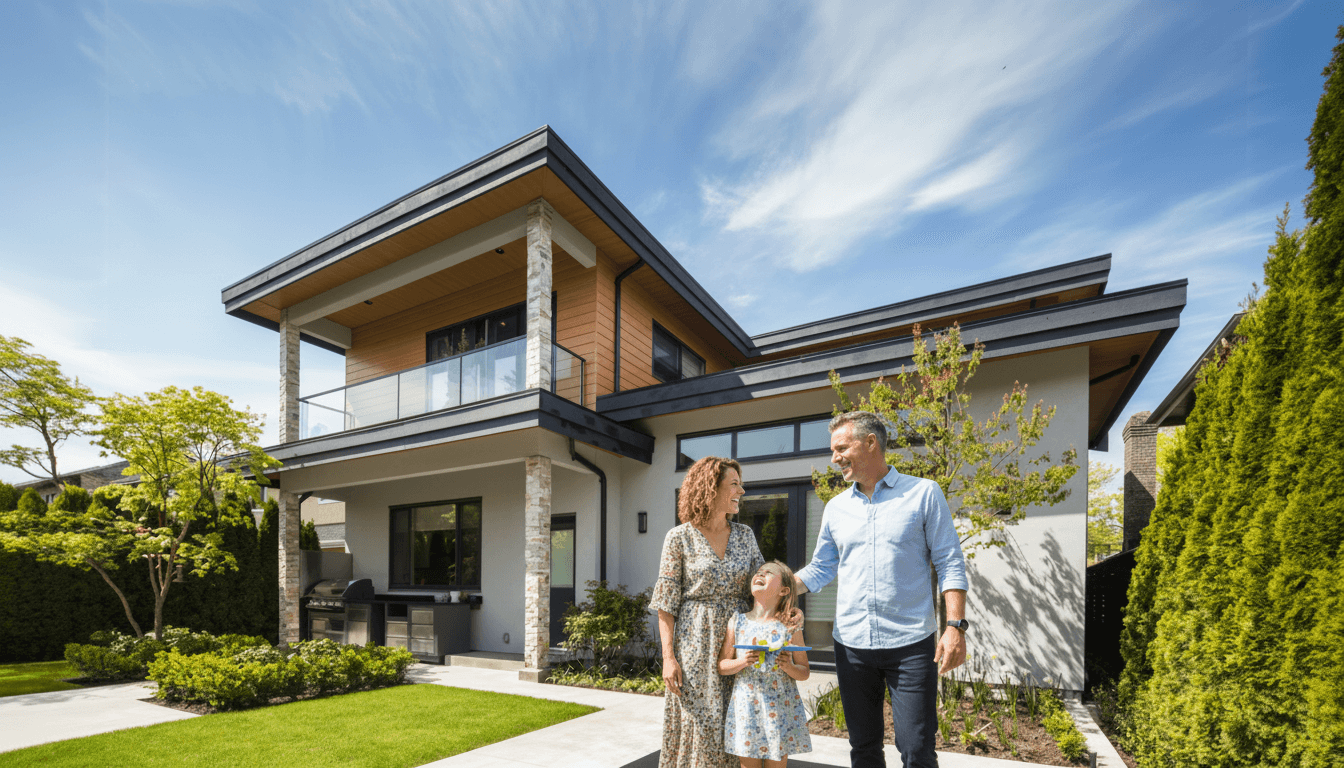
Custom Homes (Design-Build):
Mid-range custom builds: $350 to $500 per square foot
Upper-range custom builds: $500 to $700 per square foot
High-end luxury builds: $700+ per square foot
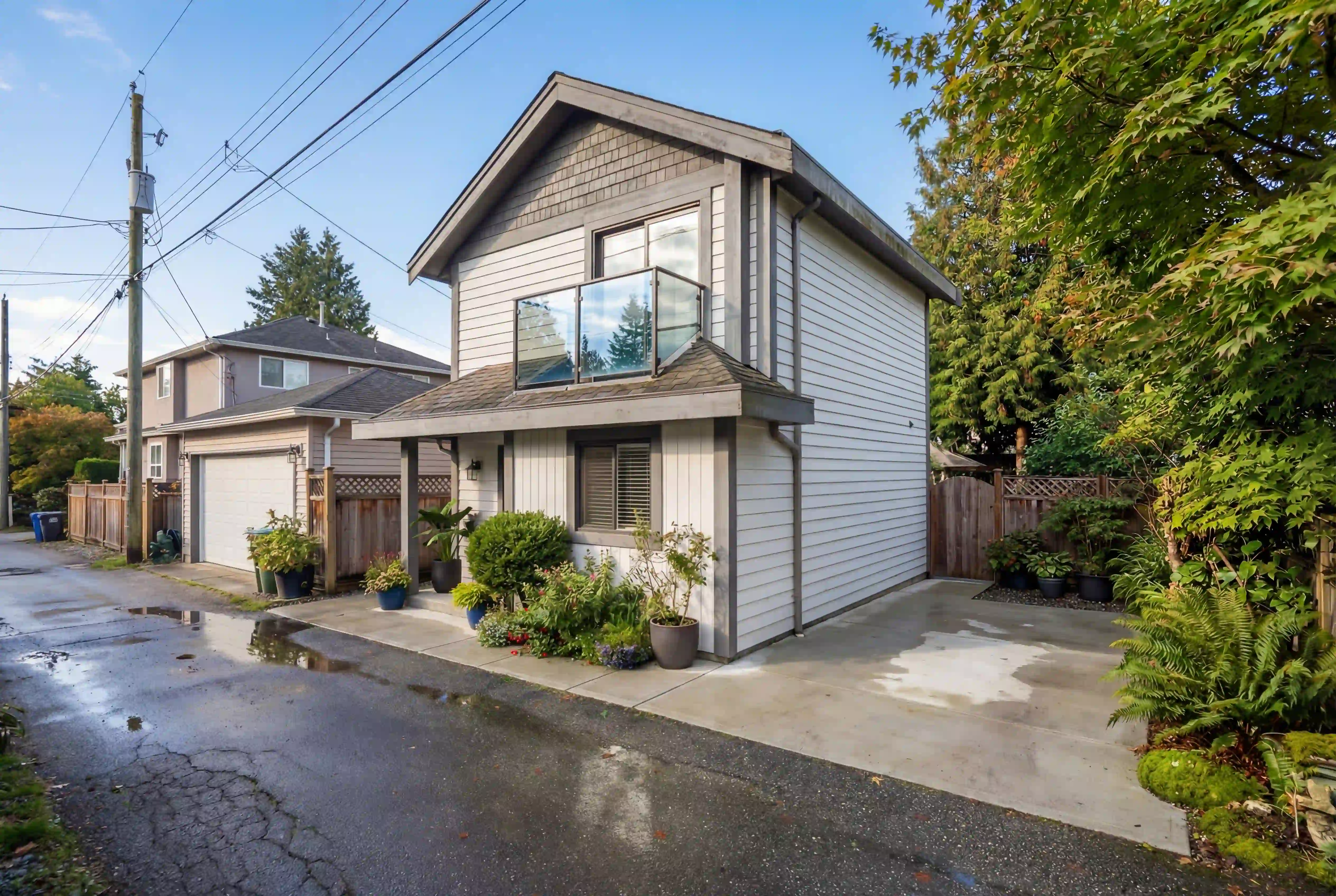
Laneway Homes:
Typical range: $400 to $600+ per square foot (smaller footprints cost more per square foot due to fixed costs like permits, servicing, and foundations)
Multiplexes (3 to 6 units under R1-1 zoning):
Varies widely based on unit count, lot size, and tenure (strata vs. rental). Expect construction costs in a similar range to custom homes, with additional city fees and levies that can exceed $100,000 per project.
These numbers cover construction costs. They don't include land, which in Vancouver is often the biggest expense of all.
A few things to keep in mind as you read those ranges.
The low end assumes standard finishes, efficient floor plans, and straightforward lot conditions.
The high end reflects complex designs, premium materials, challenging sites (steep grades, tight access, extensive tree protection), and high-performance building envelope requirements under BC Energy Step Code.
And here's something most cost guides won't tell you.
The per-square-foot number is a rough compass.
It's useful for early budgeting.
But two homes at the same square footage can cost very different amounts based on the number of bathrooms, the complexity of the roof, the window-to-wall ratio, and dozens of other design decisions.
That's why the process you use to get to your final number matters more than the initial estimate.
What's Included in "Cost Per Square Foot" (And What's Missing)
When a builder quotes a cost per square foot, ask what that includes.
Because the answer varies wildly.
Typically included in construction cost:
Foundation and structural framing
Roofing, siding, and building envelope
Plumbing, electrical, and HVAC rough-in and finishing
Insulation and drywall
Interior finishes (flooring, cabinetry, countertops, fixtures)
Painting and trim
Site supervision and project management
Often excluded (and these add up fast):
Land acquisition (in Vancouver, a standard 33' x 122' lot can cost $1.5M to $3M+ depending on neighbourhood)
Design and architectural fees (typically 8% to 12% of construction cost)
Permits and city fees (building permits, development cost levies, utility connection charges, Metro Vancouver DCCs, TransLink DCCs). For a new single-family home in Vancouver, permit-related costs alone can run $50,000 to $150,000+
Demolition of existing structures ($15,000 to $40,000+)
Site preparation (grading, soil remediation, tree removal or protection)
Landscaping ($15,000 to $100,000+)
Utility connections (sewer, water, electrical, gas)
GST (5% on the full construction cost)
Legal and survey fees
Interim financing costs (construction mortgage interest during the build)
When you add everything together, a 3,000 square foot custom home in Vancouver with mid-range finishes might look something like this as a rough example:
Category | Estimated Cost |
|---|---|
Construction (at $450/sq ft) | $1,350,000 |
Design and engineering fees | $120,000 |
Permits, levies, and city fees | $80,000 |
Demolition and site prep | $35,000 |
Landscaping | $40,000 |
Utility connections | $25,000 |
GST on construction | $67,500 |
Total (excluding land) | $1,717,500 |
That's why budgeting only for the "per square foot" number leaves people blindsided.
The soft costs and fees can add 15% to 25% on top of your construction budget.
What Drives Custom Home Costs Up (and Down)
Every custom home is different. But after building across Metro Vancouver for years, certain patterns show up again and again.
Design Complexity
A simple rectangular footprint with a straightforward roof costs less than an L-shaped home with multiple roof planes, dormers, and cantilevers. Every jog in your exterior walls adds framing cost, siding cost, and roofing cost.
This doesn't mean you need to build a box.
It means understanding the cost impact of design choices early, while you're still in the design phase, gives you real control over your final budget.
Number of Bathrooms and Kitchens
Bathrooms and kitchens are the most expensive rooms in any home per square foot.
plumbing
tile
cabinetry
fixtures
ventilation
A 3,000 square foot home with two bathrooms will cost meaningfully less than one with five bathrooms.
Finish Level
This is where budgets stretch the most.
Standard laminate countertops vs. natural stone.
Builder-grade cabinetry vs. custom millwork.
Vinyl plank vs. engineered hardwood.
The key is knowing what your allowances are before you fall in love with the $40,000 kitchen that was supposed to cost $18,000.
Site Conditions
Flat, clean lots with good soil are the easiest and cheapest to build on. Sloped lots, properties with high water tables, contaminated soil, buried debris, or limited access for equipment all add cost.
Tree protection bylaws in Vancouver can also affect your foundation design and construction approach, adding time and money.
Building Envelope and Energy Requirements
Every new home in Vancouver must meet BC Energy Step Code requirements. Higher Step Code levels mean better insulation, tighter building envelopes, more efficient windows, and more sophisticated mechanical systems.
These requirements improve your home's long-term energy performance and comfort. They also add to construction costs, particularly for high-performance windows, additional insulation, and heat recovery ventilation systems.
Permitting Timeline
Here's something people don't think about as a "cost," but it is.
Vancouver's average permit processing time for new single-family homes dropped to around 21 weeks as of late 2024. That's an improvement from 34 weeks earlier in the year. But it still means months of waiting between submitting your application and getting the green light to build.
During that time, material prices can change.
Your construction mortgage may be accruing interest.
And if your submission is incomplete or requires revisions…
You go to the back of the line.
A builder who understands Vancouver's permitting process inside and out, and who submits clean, complete applications the first time, saves you both time and money.
The Budget Problem Nobody Talks About
Here's where most custom home projects go sideways.
It happens when the design phase and the budgeting phase are disconnected.
Picture this.
You hire an architect.
You spend months designing your dream home.
You fall in love with the layout, the ceiling heights, the wall of windows overlooking the garden.
Then you take those plans to a builder for pricing…
And the number comes back $400,000 over your budget.
Now you're stuck.
You either cut features you love, go back to the architect for expensive redesigns, or stretch your budget to a place that keeps you up at night.
This is the single most common way custom home builds go wrong.
And it happens because design and cost were treated as separate conversations instead of one continuous process.
How to Avoid This
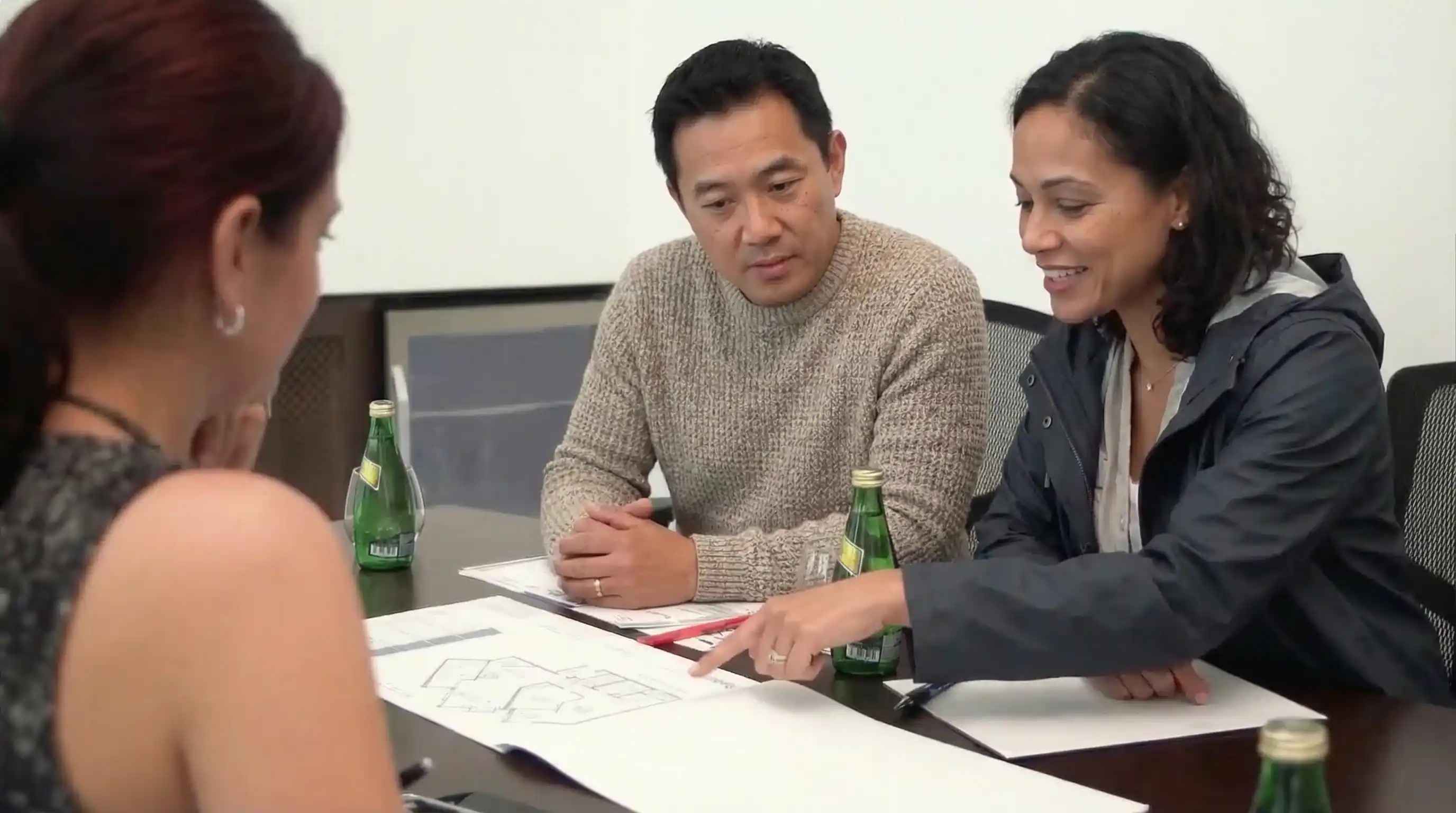
The builders who protect their clients from this problem do something specific. They bring cost awareness into the design phase from the very beginning.
At Vancouver Custom Homes, we call this cost engineering during design.
Here's what that means.
Before we design anything, we start with a high-level budget based on your wants, your needs, and what's actually buildable on your specific property. We look at your lot's zoning, setbacks, and allowable density to figure out the "invisible box" you can build within.
Then, as your design develops, every decision gets checked against your budget in real time. If a design choice pushes the cost up, we discuss it immediately. You make informed decisions at every step, while there's still time to adjust without losing work or momentum.
By the time the design is finalized, the cost has already been engineered into it.
You know exactly what you're building and exactly what it costs.
No surprises at the end.
No painful redesigns.
No "we'll figure out the budget later."
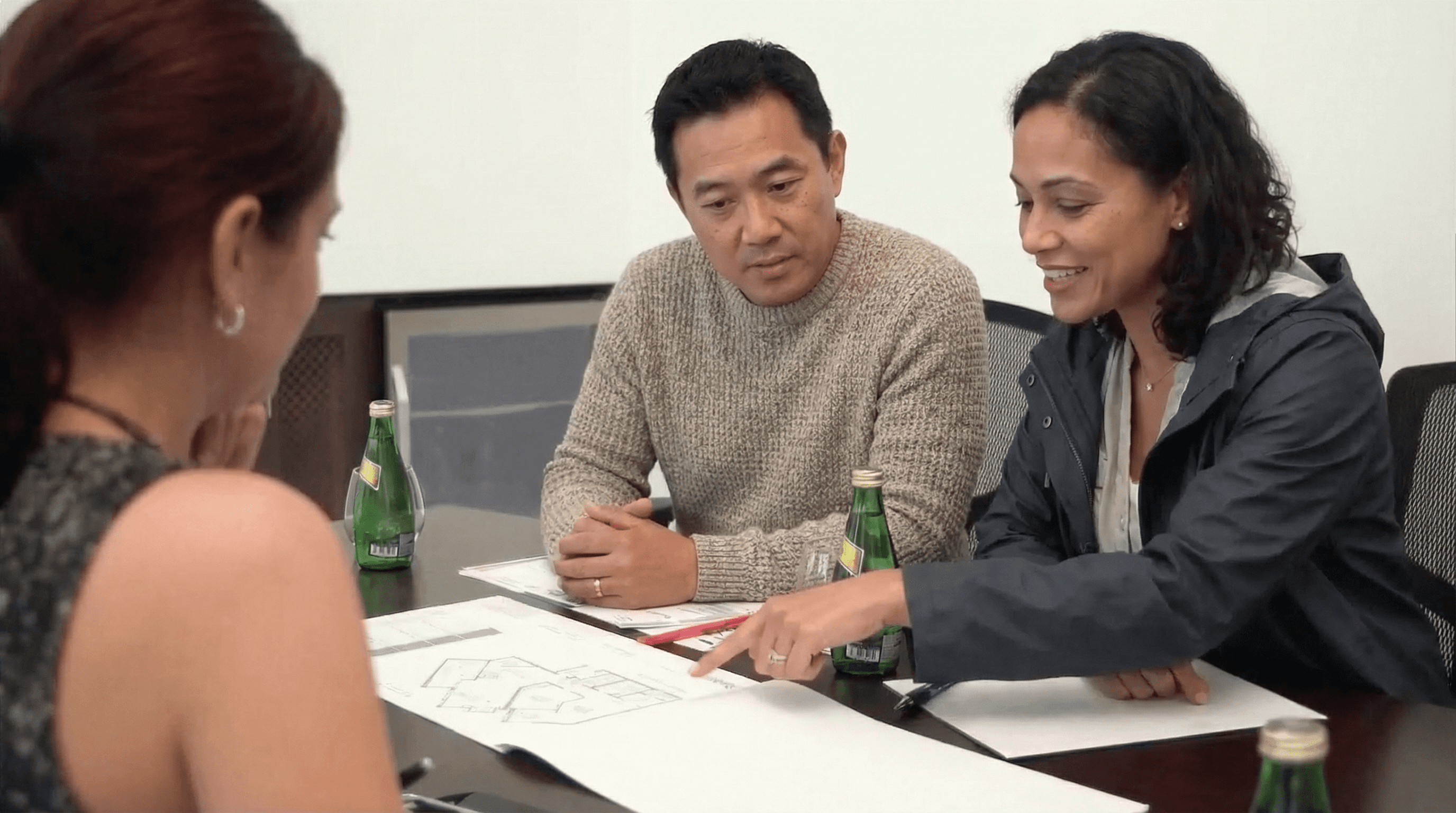
Fixed-Cost vs. Cost-Plus: Why Your Pricing Model Matters
This might be the most important section in this entire guide.
There are two common pricing models for custom home construction. They work very differently. And the one you choose has a direct impact on whether your budget holds.
Cost-Plus Pricing
The builder charges you for the actual cost of labour and materials, plus a percentage markup (typically 15% to 25%). The final cost is only known when the project is finished.
On paper, this sounds transparent. In practice, it creates a structural problem.
The builder's compensation goes up when your costs go up. If the project runs over budget, the builder actually earns more. The incentives don't align with keeping your project on budget and on schedule.
Budget overruns under cost-plus often happen because the initial "budget" was really just an estimate. There's limited accountability to that number because the model is designed to be flexible.
Fixed-Cost Pricing
The builder provides a fixed price for all construction labour, building materials, and structural components. The only variable costs are your finish selections, which are managed through a detailed allowance system.
This is how Vancouver Custom Homes structures every project.
We fix the cost on everything you can't control: framing, concrete, roofing, plumbing rough-in, electrical rough-in, insulation, drywall, and all the "behind the walls" work. These are the items where surprises happen under cost-plus.
For finish materials like flooring, tile, cabinetry, countertops, and fixtures, we provide itemized allowances. You know exactly what's allocated for each category. If you spend more than the allowance, you know the cost increase before you approve it. If you spend less, you keep the savings.
Why this matters for your budget:
Under this model, our incentives align with yours. We're motivated to finish on budget and on time because overruns cost us, too. Your win is our win.
Every cost decision is documented and approved by you before work happens. There are no "by the way, you owe an extra $10,000" conversations at the end.
How to Budget Realistically for a Custom Home in Vancouver
Here's a simple framework to start from.
Step 1: Know Your Total Available Budget
This includes savings, equity, and your construction mortgage capacity. Talk to your lender early. Know your ceiling before you start designing.
Step 2: Subtract Land Costs
If you already own the lot, you're ahead. If you're purchasing, subtract the land cost from your total budget. What remains is your construction and soft-cost budget.
Step 3: Set Aside 15% to 25% for Soft Costs
Permits, fees, design, engineering, surveys, landscaping, utility connections, GST. These costs are real and unavoidable. Don't treat them as an afterthought.
Step 4: What Remains Is Your Construction Budget
Divide this by your target square footage to see where you land on the cost-per-square-foot spectrum. If it falls within the ranges we discussed above, you're in a realistic zone. If it's well below, you may need to adjust your expectations on size, finish level, or both.
Step 5: Find a Builder Who Engineers Cost Into Design
This is the step that determines whether your budget holds.
If you go through a traditional process where design and costing happen separately, you're gambling. If you work with a design-build team that integrates cost engineering from day one, you're building with control and clarity at every step.
What About Timelines?
Budget and timeline are connected. The longer a project takes, the more it costs in carrying charges, material escalation, and lost opportunity.
Here's a realistic timeline for a custom home in Metro Vancouver:
Phase | Timeline |
|---|---|
Design (including cost engineering and 3D modelling) | 6 weeks to 3 months |
Permitting | 5 to 8 months (main variable outside your control) |
Interior selections and procurement | Runs parallel with permitting |
Construction | 10 to 14 months |
Total: Design to Move-In | 18 to 24 months |
The biggest variable is permitting. Vancouver's processing times have improved, but they still depend on the completeness of your submission and the complexity of your project.
During the permitting wait, a good builder doesn't sit idle. That's the time to finalize interior selections, order long-lead materials, and prepare for a fast, efficient construction start once permits are issued.
A Note on the Vancouver Market Right Now in 2026
Vancouver's housing landscape is changing fast.
The new R1-1 zoning allows multiplexes (3 to 6 units) on lots that were previously restricted to single-family homes. Laneway home construction continues at a strong pace, with over 4,000 built since 2009. Provincial legislation through Bill 44 is pushing cities across BC to enable more housing options.
For homeowners, this means more possibilities on your property than ever before.
A custom home with a secondary suite.
A laneway home for aging parents or rental income.
A multiplex development that creates multiple dwellings on a single lot.
Each of these options has different cost implications, zoning requirements, and design considerations. But they all start with the same question: What's possible on your specific property?
What's Your Next Step?
If you're serious about building a custom home in Vancouver, the best thing you can do right now is get clarity on your specific situation.
Every lot is different
Every budget is different
Every family's needs are different
The numbers in this guide give you a solid foundation for planning.
But the real answers come from looking at your property, understanding your goals, and mapping out what's actually buildable and affordable for you.
That's exactly what our free property consultation is for.
We'll walk through your property's zoning and buildable area, discuss your goals and budget range, and give you a clear picture of what's possible. No pressure, no obligation.
Just honest answers to the questions that matter most before you commit to building.
Book your free property consultation below.
Vancouver Custom Homes builds custom homes, laneway homes, and multiplexes across Metro Vancouver. We use a design-build approach with cost engineering during design, fixed-cost pricing, and a dedicated team from first call to move-in day.