Laneway Homes in Vancouver: Rules, Costs, and What to Know

James Whitfield
12 mins
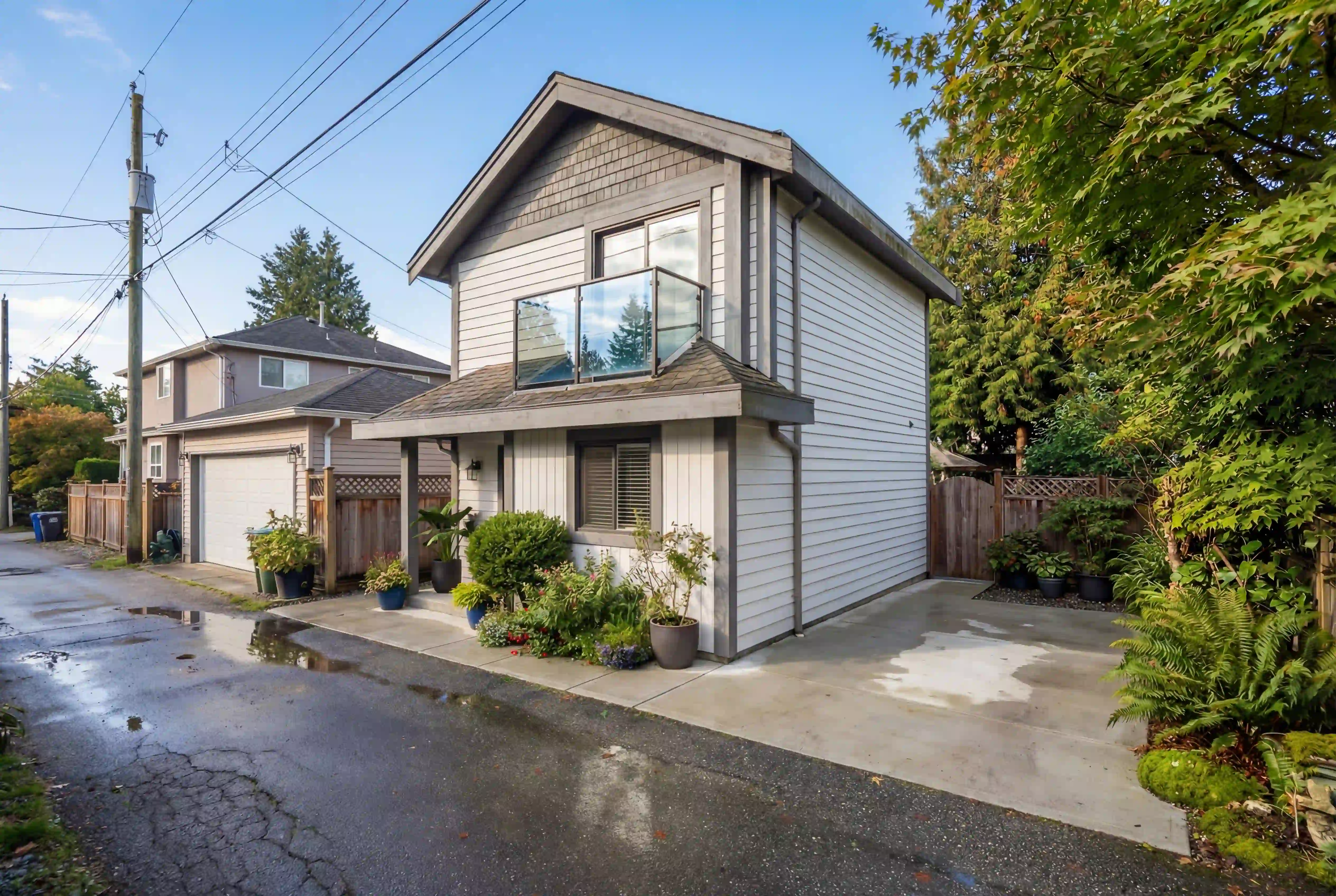
Vancouver has been building laneway homes since 2009. In that time, more than 4,000 have gone up across the city.
There are good reasons for that number.
A laneway home can house aging parents who want to stay close.
It can give adult children a launchpad without leaving the property.
It can generate $2,500 to $4,500 per month in rental income.
And it adds real, lasting value to your property.
But between zoning rules, permit timelines, construction costs, and city fees, most homeowners don't know where to start. The information online is scattered, some of it is outdated, and the numbers are all over the place.
This guide brings it all together.
We'll cover who can build a laneway home, what it actually costs in 2026, how long the process takes, and what to watch for so you don't waste time or money on surprises.
What Is a Laneway Home?
A laneway home is a small, detached house built in the backyard of an existing residential property, typically facing the rear lane.
These are fully self-contained homes. They have their own kitchen, bathroom, living area, and sleeping quarters. They get their own address and their own utility connections.
A few things to know up front:
Laneway homes cannot be sold separately from the main house. They stay attached to your property title. You can rent them out, use them for family, or live in one yourself while renting the main house, but you can't sell one on its own.
The typical size is 500 to 900 square feet, though some lots allow up to roughly 1,000 square feet depending on your lot dimensions.
You'll also see these called coach houses, garden suites, or accessory dwelling units (ADUs). In Vancouver, the term "laneway house" is the most common, and it's what the city uses in its bylaws.
Can You Build a Laneway Home on Your Property?
Not every lot qualifies. Vancouver has specific eligibility requirements, and it's worth checking these before you spend any money on design or planning.
Here are the main ones.
Lane access. Your property needs to have vehicle access from a rear lane. Corner lots with lane access also qualify. If your lot doesn't back onto a lane, a laneway home isn't an option.
Lot width. Your lot must be at least 32 feet (9.8 metres) wide. Some narrower lots may qualify under certain conditions, but this is the standard threshold.
Single detached house on the lot. You can only build a laneway home behind a single detached house. If your property has a duplex or other multi-family dwelling as the main house, a laneway home isn't permitted. The main house can have a secondary suite, but the primary structure needs to be a single detached home.
Zoning. Most single-family properties in Vancouver now fall under the R1-1 zone (Residential Inclusive), which was introduced in late 2023. Laneway homes are a permitted use in R1-1. They're also allowed in many RT and RM zones.
If you're not sure whether your lot qualifies, the City of Vancouver's website has tools to check your zoning. Or you can skip that step entirely and ask a builder who works in Vancouver regularly. They'll know within minutes whether your lot is eligible.
What Are the Size and Design Rules?
Vancouver's bylaws put clear limits on how big your laneway home can be and where it can sit on your lot.
Floor area. The maximum floor space for a laneway home is calculated as a ratio of your lot size. Under the updated R1-1 zoning, the maximum is 0.25 times your lot area. On a standard 33-by-122-foot lot (about 4,026 square feet), that works out to roughly 1,006 square feet. Previous rules capped this at 0.16 of lot area, so the new zoning is a significant expansion.
Height. Laneway homes can be up to 8.5 metres (about 28 feet) tall. That's enough for a comfortable two-storey home within the allowed footprint.
Setbacks. Your laneway home needs to maintain specific distances from property lines, the main house, and the lane. These vary by lot configuration, but your designer will map these during the initial site analysis.
Parking. In most cases, you need to provide one on-site parking space. This can be a garage, carport, or parking pad.
Tree protection. Vancouver takes tree preservation seriously. Your design needs to account for existing trees on your property and potentially neighbouring properties. Tree protection plans are required as part of the permit application, and this is one of the most common sources of application delays.
Energy performance. Your laneway home must meet BC Energy Step Code requirements. This means energy modelling, an energy advisor, and construction methods that meet current performance standards.
The specifics matter, and they vary property to property. Two lots on the same block can have different buildable envelopes depending on width, depth, grade, tree coverage, and neighbouring structures. This is why a proper site analysis before any design work is so important.
How Much Does It Cost to Build a Laneway Home in Vancouver?
This is the question everyone asks first. And the answer isn't simple, because there are several categories of cost that get lumped together or left out depending on who you're talking to.
Let's break it down honestly.
Construction Costs (Hard Costs)
This is the labour and materials to physically build the structure. In 2026, expect construction costs for a laneway home in Vancouver to fall in the range of $400 to $550+ per square foot.
That range depends on the complexity of your design, the level of finishes, and site-specific conditions. A straightforward 900-square-foot laneway home with mid-range finishes will cost less per square foot than a highly customized 700-square-foot design with premium materials.
Smaller homes often cost more per square foot than larger ones. That's because the expensive elements (kitchen, bathrooms, mechanical systems, utility connections) are relatively fixed regardless of total square footage. A 600-square-foot laneway home still needs a full kitchen, a full bathroom, a furnace, and a hot water tank. Spreading those costs over fewer square feet drives the per-square-foot number up.
Soft Costs (Design, Engineering, Permits)
Before construction starts, you'll spend money on:
Architectural and design fees
Structural engineering
Geotechnical reports (if needed based on soil conditions)
Energy modelling and energy advisor fees
Surveying
City of Vancouver permit fees and development cost levies
Insurance
These soft costs typically add 15 to 25% on top of your construction budget. For a laneway home, permit fees and development cost levies alone can run $40,000 to $65,000 or more depending on your specific situation.
Servicing and Utility Connections
This is the cost most homeowners underestimate.
Your laneway home needs its own connections to city water, sewer, and electrical service. This means trenching from the lane or the main house, running new lines, and paying connection fees.
BC Hydro electrical connection, city water and sewer hookups, and potentially FortisBC gas (though gas connections are becoming less common under Vancouver's Zero Emissions Building Plan) all add up. Servicing costs vary widely based on how far your laneway home sits from existing infrastructure and whether any upgrades to existing service are needed.
Total Project Cost
When you add construction, soft costs, and servicing together, a complete laneway home project in Vancouver typically lands between $400,000 and $600,000+ all in.
Here's a rough planning framework:
Component | Estimated Range |
|---|---|
Construction (hard costs) | $360,000 to $500,000+ |
Soft costs (design, engineering, permits, fees) | $60,000 to $100,000+ |
Servicing (utility connections) | $20,000 to $50,000+ |
Total project cost | $400,000 to $600,000+ |
These numbers assume a laneway home in the 850 to 1,000 square foot range with mid-range to upper-mid-range finishes. Simpler designs with standard finishes can come in at the lower end. Custom designs with high-end finishes and difficult site conditions will push toward the upper end or beyond.
Why the Range Is So Wide
Every laneway home project is different. Two properties on the same street can have completely different costs based on:
Lot grade and soil conditions (sloped lots or lots with poor drainage cost more to build on)
Proximity of existing utility connections
Tree protection requirements (working around protected trees adds cost)
Design complexity (a simple rectangular footprint costs less than an L-shaped or multi-level design)
Interior finish level (stock cabinetry versus custom millwork, laminate versus hardwood, standard fixtures versus designer selections)
The only way to get an accurate number for your specific project is to have a builder assess your property, understand your goals, and produce a detailed cost estimate.
The Financial Upside
Laneway homes cost real money to build. But they also create real financial returns.
Rental income. A well-designed laneway home in Vancouver can rent for $2,500 to $4,500 per month depending on location, size, and finishes. That's $30,000 to $54,000 per year in gross rental income.
Property value. Adding a legal, income-producing secondary dwelling increases your property's overall market value. Buyers pay a premium for properties that come with a built-in revenue stream.
Mortgage offset. For many homeowners, rental income from a laneway home significantly reduces (or eliminates) monthly mortgage carrying costs. This is the "mortgage helper" strategy, and it's one of the most common reasons people build.
Payback period. Depending on your build cost and rental income, many homeowners recoup their investment within 8 to 15 years through rental revenue alone, not counting the property value increase.
The math gets even more compelling when you build a laneway home at the same time as your main house. Combining the projects shares site mobilization costs, reduces utility connection complexity, and creates economies of scale in construction. Historical data shows that laneway homes built alongside the main house tend to cost less than those added to existing properties.
How Long Does It Take?
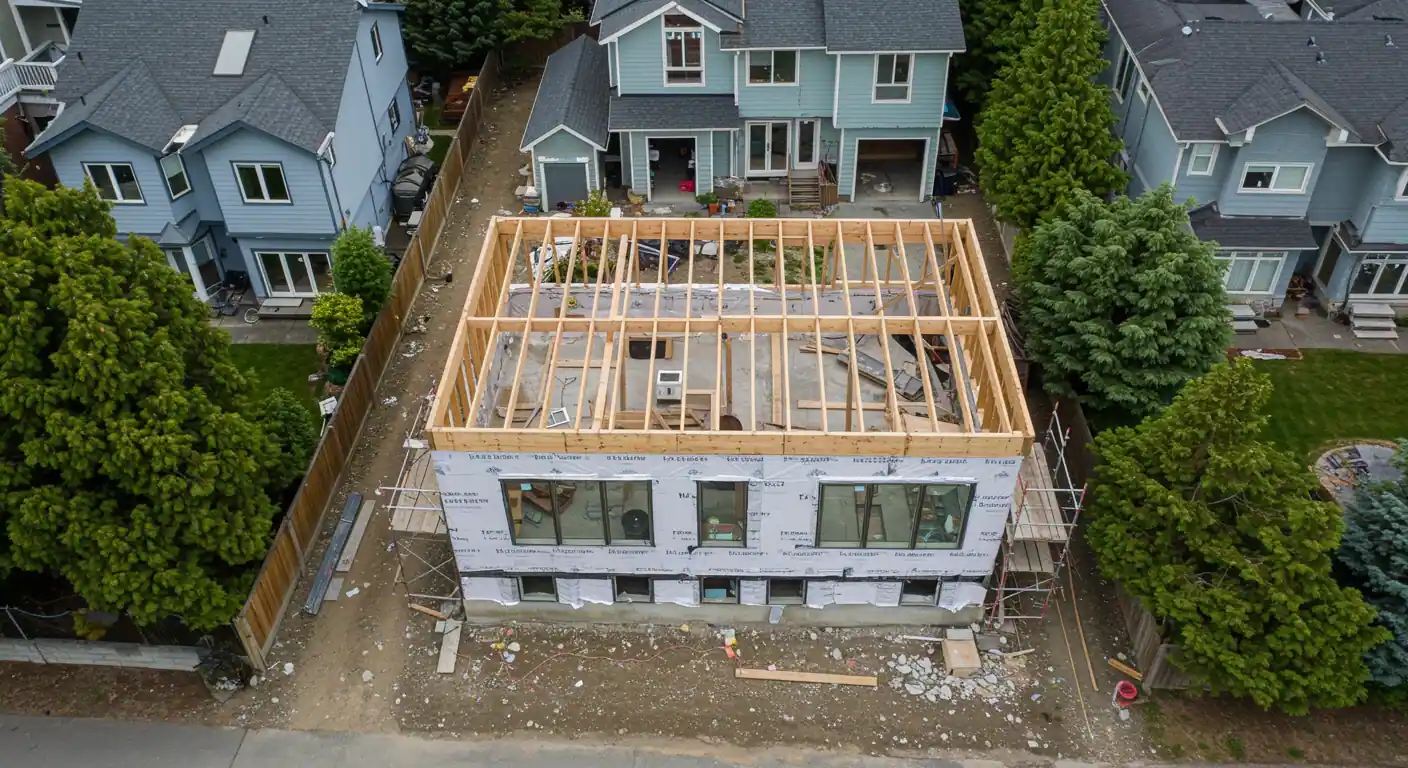
The timeline for a laneway home project breaks into three main phases.
Design and Pre-Construction (2 to 4 Months)
This includes site analysis, design development, engineering, energy modelling, and preparing your permit application package. How fast this moves depends on how quickly you make design decisions and how complex your site conditions are.
Permitting (3 to 5 Months)
As of mid-2025, standalone laneway home permits in Vancouver averaged about 13 weeks of processing time. That's a significant improvement from previous years.
The City of Vancouver has been actively working to speed up the process. They've introduced the Project Requirement Exploration Tool (PRET) for laneway homes in R1-1 zones, which helps ensure applications are complete before submission. Complete applications move faster.
That said, 13 weeks is an average. Complex applications, projects requiring heritage review, or submissions with incomplete documentation will take longer. Clean, complete applications can move faster.
The single biggest thing you can control is the quality of your submission. Every time an application gets sent back for corrections or missing information, you lose weeks. Working with a builder who knows exactly what the city expects makes a measurable difference here.
Construction (6 to 10 Months)
Actual construction time depends on size, complexity, and time of year. A straightforward laneway home can be built in as little as six months. More complex designs, difficult site conditions, or material lead-time issues can stretch this closer to ten months.
Total Timeline: 12 to 18 Months
From your first conversation with a builder to move-in day, plan for 12 to 18 months for a laneway home project. The biggest variable is permitting. Everything before and after permitting is largely within your control and your builder's control.
Common Mistakes to Avoid
After building laneway homes across Vancouver, we've seen the same mistakes come up again and again.
Underestimating total cost. A quote for "construction only" at $300 per square foot sounds affordable until you add $60,000+ in soft costs and $30,000+ in servicing. Always think in terms of total project cost, not just construction cost per square foot.
Not checking zoning first. Before you fall in love with a design, confirm your lot actually qualifies. Lane access, lot width, and existing structures on your property all matter. A five-minute zoning check can save you months of wasted planning.
Ignoring utility connection complexity. If your existing water or sewer service needs upgrading to support an additional dwelling, that cost and timeline impact needs to be identified early. Utility surprises during construction are expensive.
Skipping the site analysis. Your lot's grade, soil conditions, tree coverage, and proximity to neighbouring structures all affect what you can build and what it will cost. A thorough site analysis before design work prevents costly redesigns later.
Designing without budget alignment. The most common source of frustration in any building project is falling in love with a design you can't afford. Working with a builder who engineers cost into the design process from day one prevents this entirely.
The New Zoning Landscape: What R1-1 Means for You
Vancouver's zoning overhaul in late 2023 changed the game for laneway homes. The old patchwork of RS zones has been consolidated into R1-1 (Residential Inclusive), and the implications are significant.
More floor space. The maximum floor space ratio for laneway homes increased from 0.16 to 0.25 of lot area. On a standard lot, that means your laneway home can be meaningfully larger than what was previously allowed.
More units per lot. Under R1-1, a standard 33-foot lot can now accommodate up to 3 or 4 units (configured as a house with a suite plus a laneway home with a suite, or as a multiplex). Larger lots can go up to 6 units, and lots near frequent transit can accommodate up to 8 units if all are secured rental.
More design flexibility. The R1-1 zone allows for flat roofs, greater height (up to 37 feet for some configurations), and simplified setback calculations. This gives architects and designers more room to create laneway homes that feel spacious and contemporary.
Laneway homes remain popular. Despite the new multiplex option, City of Vancouver staff have noted that laneway homes continue to be a desirable choice for homeowners who want to keep their existing home and add density incrementally. Since 2018, the city has averaged about 340 laneway home permit applications per year, and staff anticipate this will continue.
The expanded zoning creates more options, but it also creates more decisions. Should you build a laneway home, convert to a multiplex, or do both? The right answer depends on your goals, your property, and the math.
Laneway Home vs. Multiplex: Which Makes Sense?
With the new R1-1 zoning, many homeowners are weighing the laneway home option against a multiplex conversion. Here's how to think about it.
Build a laneway home if:
You want to keep your existing main house. A laneway home adds a unit without touching your primary residence. This is the gentlest form of densification and the simplest to execute.
You want rental income with minimal disruption. You can live in your main house while the laneway home is being built in the backyard. Once complete, the rental income starts immediately.
You have aging parents or adult children who want nearby but independent living space.
Consider a multiplex if:
You're planning to demolish and rebuild anyway. If the main house is at end of life, a multiplex lets you maximize the number of units and the total value of the property.
You want to create strata-titled units that can be individually sold. Multiplex units can be stratified. Laneway homes cannot.
You're optimizing purely for return on investment and don't need to preserve the existing home.
Consider both if:
Your lot is large enough and your goals support it. Under R1-1, you could build a new main house with a secondary suite and a laneway home with its own suite, creating four units on a single lot. This requires careful planning but maximizes the property's potential.
The best path forward depends on your specific property and goals. A builder who understands both laneway homes and multiplexes can help you evaluate the options side by side.
How VCH Approaches Laneway Homes
At Vancouver Custom Homes, laneway homes are one of our three core project types alongside custom new builds and multiplexes.
Our approach is the same whether we're building a 3,500-square-foot custom home or a 900-square-foot laneway home. We start with a site analysis that maps your zoning, buildable envelope, and high-level budget. We cost-engineer every design decision in real time so there's no gap between what you want and what you can afford. And we build a full 3D model and VR walkthrough so you can experience the space before construction begins.
This matters even more for laneway homes than for larger projects. When you're working with 850 to 1,000 square feet, every inch of layout matters. Being able to stand inside a virtual version of your laneway home and feel the ceiling height, the kitchen flow, and the bedroom proportions before a single nail is driven eliminates the "this isn't what I expected" problem that plagues small-footprint builds.
We also handle the full permitting process, including utility coordination, tree protection plans, and energy compliance documentation. Our team knows what the City of Vancouver expects, and we submit clean applications that move through review faster.
What's Your Next Step?
If you're thinking about building a laneway home, the first question to answer is: what's possible on your specific property?
Every lot in Metro Vancouver is different. Zoning, lot dimensions, lane access, existing structures, tree coverage, and soil conditions all shape what you can build and what it will cost.
Our free property consultation answers those questions.
We'll review your lot's zoning and buildable envelope, discuss your goals (rental income, family housing, property value), and give you a realistic picture of what a laneway home project would look like on your property, including timeline and budget range.
No pressure. No commitment. Just the information you need to make a confident decision.
Book your free property consultation below.
Vancouver Custom Homes builds custom homes, laneway homes, and multiplexes across Metro Vancouver. Our design-build process brings cost engineering, 3D modelling, VR walkthroughs, and a dedicated team together so you know exactly what you're building and what it costs before construction begins.